Slow Travel in Apulia: How to Experience Apulia Like a Local
Slow Travel in Puglia: How to Experience Apulia Like a Local
Apulia is not just a place to visit. It is a region to feel, taste and live slowly. If you are tired of rushing from one tourist attraction to another, slow travel in Apulia is the perfect way to experience Apulia like a local, not just a visitor.
In this guide, we’ll show you how to slow down, connect with local people, enjoy seasonal food and discover authentic experiences that go far beyond the typical postcard of trulli and beaches.
What Slow Travel in Apulia Really Means
Slow travel is not about seeing less. It is about experiencing more.
Instead of trying to cover all of Apulia in a few days, you choose fewer places and stay longer. You walk more, talk more, taste more. You follow the rhythm of local life: the morning coffee at the bar, the long family lunch on Sunday, the evening stroll in the historic centre.
In Puglia, slow travel means:
- staying in one village or town for several days
- choosing local experiences instead of only “must-see” attractions
- travelling in the shoulder seasons (spring and autumn)
- supporting small family businesses, artisans and farmers
If you want to understand the soul of the region, start from its capital of baroque: Lecce and its baroque charm.
Where to Stay to Feel Like a Local
Sleep in Historic Centres and Small Villages
Instead of big resorts far from everything, choose:
- a small B&B in a historic centre
- a traditional masseria in the countryside
- a family-run guesthouse in a lesser-known village
This way you can:
- walk to the main square in the evening
- shop at local bakeries and markets
- easily join local festivals and events
If you love baroque architecture and vibrant nightlife, Lecce is a perfect base. If you prefer whitewashed alleys and sea views, towns in Salento are ideal. For a deeper dive into this area, check our article on authentic Salento experiences.
Authentic Experiences to Add to Your Slow Travel Itinerary
Slow travel in Apulia is all about experiences, not checklists.
Cook With Locals and Taste Seasonal Food
Join a cooking class in a local home or masseria. Learn how to prepare orecchiette, focaccia, or traditional dishes using seasonal ingredients from the market or the garden.
To get inspired, have a look at our post about traditional Apulian cuisine and local dishes.
This is one of the best ways to:
- understand Apulia's food culture
- meet local families
- bring home real recipes and stories, not just photos
Discover Olive Groves and Ancient Trees
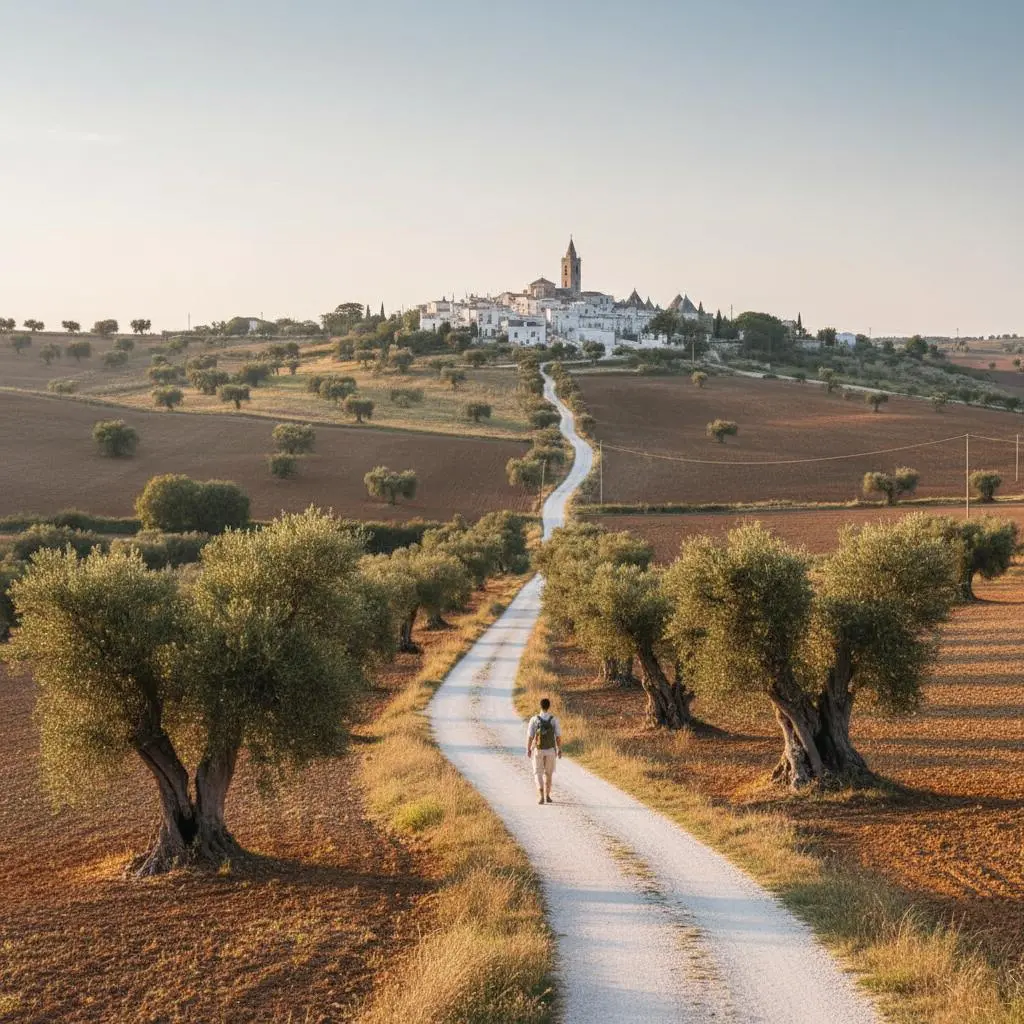
Apulia is famous for its centuries-old olive trees and extra virgin olive oil. Visit a traditional olive grove and a local mill to learn how olive oil is produced, taste different varieties, and walk among monumental trees that are older than many countries.
We talk more about this in our article on ancient olive trees and olive oil culture in Puglia.
It’s a powerful, quiet experience that perfectly fits the spirit of slow travel.
Join Local Music and Dance
In Salento, traditional music and dance are still alive. Spend an evening listening to pizzica and watching (or joining!) local people dancing in a square or at a small festival.
If you are curious about this tradition, don’t miss our guide to pizzica and Salento folk music.
This is not a staged show for tourists, but a real expression of community and identity.
How to Avoid the Crowds Without Missing the Highlights
You don’t have to skip famous places like Alberobello or Polignano a Mare. Slow travel simply changes how and when you visit them.
- Go early in the morning or later in the evening
- Visit in spring or autumn instead of August
- Combine famous spots with lesser-known villages nearby
If you want to see a different side of the coast, explore our suggestions for hidden beaches in Salento where you can swim and relax, far from the busiest areas.
Ask locals for their favourite beaches, bakeries, viewpoints and walking routes. Often, the most memorable moments happen far from the main tourist routes.
Eat Like a Local, Not Like a Tourist
Food is one of the main reasons to travel to Apulia, and it’s central to slow travel.
To eat like a local:
- choose simple trattorie and family-run osterie
- try bakeries for focaccia, rustici and taralli
- follow the seasons: artichokes in spring, tomatoes in summer, wild greens in winter
In our article on where and what to eat in Apulia like a local, we share more tips on typical dishes and places loved by residents.
Don’t be afraid to ask the staff:
“What do you eat at home?”
Often, this question opens the door to the most authentic dishes.
When to Visit Apulia for a Slow Travel Experience
The best time for slow travel in Apulia is outside the peak summer months.
- Spring (April–June): mild weather, green landscapes, wildflowers, fewer crowds
- Autumn (September–October): warm sea, harvest time, olive picking, wine and food festivals
In these periods, you can:
- walk comfortably in the historic centres
- enjoy the sea without chaos
- talk more with locals, who are less busy than in August
Why Plan Your Slow Travel in Puglia With Locals
Designing a slow travel itinerary alone can be challenging if you don’t know the area. Local experts can help you:
- choose the right base according to your interests
- connect with trusted local hosts, guides and artisans
- avoid tourist traps and crowded schedules
- create a balanced itinerary with time to explore and time to simply enjoy
At To Be Local, we create tailor-made slow travel experiences in Apulia, built around your pace, passions and curiosity. We combine our knowledge of the territory with a network of local partners to design trips that are truly authentic and sustainable.
Ready to Experience Puglia Slowly?
If you want to live Apulia like a local, slow travel is the way to do it. Stay longer, move less, connect more. Taste seasonal food, walk through olive groves, listen to traditional music and let the region reveal itself day by day.
Want help planning your slow travel in Apulia?
Contact us, and we’ll design a personalized itinerary with authentic local experiences, far from the usual tourist routes.