The Art of the Weave: How the Hands of Puglia’s Fishermen Defy Time
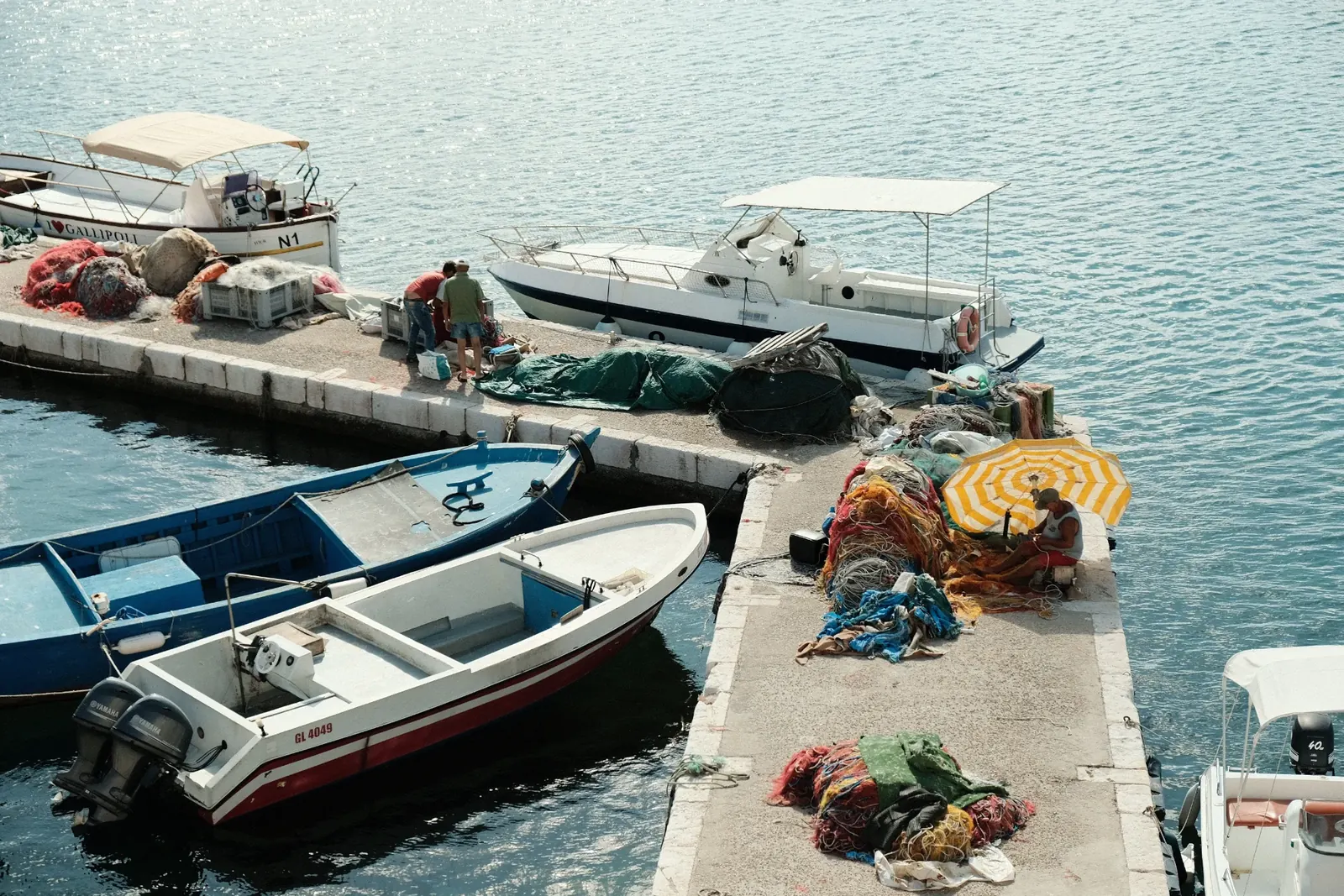
If you walk along the small harbors of Castro, Gallipoli, or Polignano a Mare at golden hour, you might hear a sound that isn't the crashing of waves. It’s a rhythmic crrr-ack, click, swish.
If you follow that sound, you’ll likely find an elder fisherman sitting on a wooden stool, surrounded by bundles of dried reeds and myrtle branches. He isn't just fixing gear; he is practicing a form of "functional sculpture" that has remained unchanged for centuries: the art of the fishing trap, or La Nassa.
The Nassa: A Masterpiece of Ancient Engineering
A nassa is a traditional bell-shaped trap used to catch high-quality seafood like lobsters, cuttlefish, and rockfish. Unlike modern industrial nets that sweep up everything in their path, the nassa is the ultimate symbol of sustainable and ethical fishing.
The design is ingenious. It features a funnel-like entrance that allows the fish to enter easily but makes it nearly impossible to exit.
- The Material: Traditional traps are made from giunco (rush) and mirto (myrtle), plants that grow wild in the Mediterranean scrub.
- The Scent: Fishermen say the scent of the myrtle is what lures the fish in—it smells like "home" to the creatures of the rocky Puglia seabed.
From Sea to Table: The Versatility of the Weave
The art of weaving in Puglia wasn't just for the water. It was a bridge between the land and the sea. While the fishermen were weaving nasse, the farmers in the hinterland were using similar techniques to create:
Fiscelle: Tiny, delicate baskets used to drain fresh ricotta and mozzarella.
Panieri: Robust baskets used for the olive harvest or for carrying the "catch of the day" to the local markets.
Every weave tells a story. A tighter knot might indicate a fisherman who worked in rougher waters; a specific pattern might be the "signature" of a family from a specific village.
Why the "Weave" is the Soul of Slow Travel
In a world of plastic and mass production, watching a local artisan weave a basket is a lesson in patience. It reminds us that authentic luxury isn't about expensive hotels; it’s about the time it takes to create something by hand.
At To Be Local, we believe that to truly "be local," you have to sit on that stool for a moment. You have to feel the rough texture of the dried reeds and listen to the stories of the men who have spent more time on the Adriatic and Ionian seas than on dry land.