
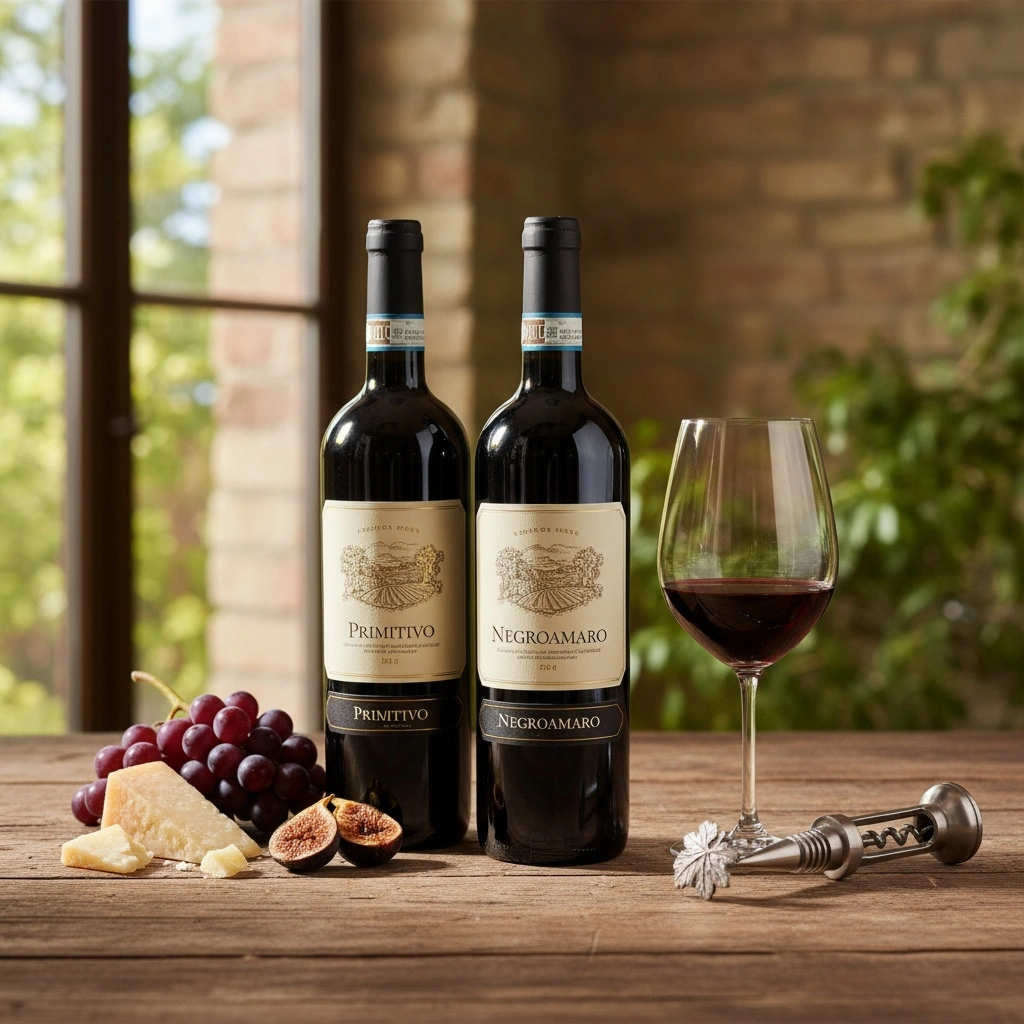
Primitivo & Negroamaro: Salento's Wine Heritage Explained
Introduction
Two grapes. Two thousand years of history. Welcome to Salento's wine revolution.
If you've ever sipped a bold red wine from Puglia, chances are you've tasted either Primitivo or Negroamaro—the two noble varietals that define the Salento wine region. These aren't just wines; they're liquid ambassadors of a land where ancient Roman vineyards meet Mediterranean sunshine, where tradition clashes beautifully with modern winemaking innovation.
But what makes these Salento wines so special? Why do wine enthusiasts travel thousands of kilometers to taste them? And most importantly—which one should you experience first?
In this guide, we'll explore the origins, characteristics, and best wineries where you can discover these legendary Puglia wines firsthand. Whether you're a seasoned oenophile or a curious traveler, this is your complete roadmap to understanding Salento's wine heritage.
What is Primitivo Wine? Origins & Characteristics
Primitivo is the rebel of Salento's wine scene—bold, unapologetic, and impossible to ignore.
The name itself tells a story: "Primitivo" means "early" in Italian, referring to the grape's early ripening cycle. This ancient varietal thrives in Salento's scorching summer heat, absorbing intense Mediterranean sunshine that transforms it into one of Italy's most powerful red wines.
The Primitivo Wine Profile
- Alcohol Content: 14-16% ABV (often higher)
- Flavor Notes: Dark berries, plum, licorice, spice, leather
- Tannins: Full-bodied, robust, structured
- Aging Potential: 5-15 years (premium selections)
- Best Served: 16-18°C, decanted 30 minutes before serving
A Wine With American Roots
Here's a fascinating twist: Primitivo is genetically identical to California's Zinfandel. DNA analysis confirmed that both grapes share the same origin—likely brought to Puglia by Venetian traders centuries ago. Today, Primitivo remains distinctly Italian, shaped by Salento's unique terroir and winemaking traditions.
Food Pairing Magic
Primitivo's bold character makes it a culinary chameleon:
- Grilled meats: Lamb, beef, wild boar
- Rich pasta: Orecchiette con ragù (the classic pairing)
- Aged cheeses: Pecorino Romano, Parmigiano-Reggiano
- Spiced dishes: Moroccan tagines, Indian curries
Negroamaro: The Heart of Salento
If Primitivo is the rebel, Negroamaro is the philosopher—complex, nuanced, and deeply rooted in Salento's soul.
The name combines two Italian words: "Negro" (black) and "Amaro" (bitter)—a poetic reference to the grape's dark color and characteristic tannins. Unlike Primitivo's aggressive power, Negroamaro offers elegance wrapped in intensity.
The Negroamaro Wine Profile
- Alcohol Content: 13-14.5% ABV
- Flavor Notes: Black cherry, plum, tobacco, almond, mineral
- Tannins: Medium to full-bodied, velvety, refined
- Aging Potential: 3-10 years
- Best Served: 16-17°C, minimal decanting needed
Terroir & Production
Negroamaro thrives in Salento's limestone-rich soils, which impart a distinctive mineral character. The grape's thick skin provides natural tannins, making it ideal for long aging. Premium producers often blend Negroamaro with Primitivo, creating wines of extraordinary complexity—like the famous Salice Salentino DOCG.
The Salice Salentino Connection
Salice Salentino is Negroamaro's official stage. This DOCG (Denominazione di Origine Controllata e Garantita) designation protects wines made from at least 80% Negroamaro grapes grown in the Salice Salentino zone. It's considered one of Southern Italy's finest red wine expressions.
Food Pairing Harmony
Negroamaro's balanced structure makes it incredibly food-friendly:
- Seafood: Grilled octopus, mussels, sea urchin
- Lighter meats: Chicken, rabbit, game birds
- Vegetable dishes: Roasted eggplant, tomato-based pasta
- Soft cheeses: Burrata, mozzarella di bufala
Primitivo vs Negroamaro: The Key Differences
| Aspect | Primitivo | Negroamaro |
|---|---|---|
| Power | Explosive, bold | Elegant, refined |
| Alcohol | 14-16% | 13-14.5% |
| Tannins | Aggressive, structured | Velvety, balanced |
| Aging | 5-15 years | 3-10 years |
| Best For | Red meat lovers | Versatile pairing |
| Price Range | €8-50+ | €7-40+ |
| Personality | The Rebel | The Philosopher |
The Bottom Line: Choose Primitivo if you want intensity and power. Choose Negroamaro if you prefer balance and elegance. Better yet—taste both and discover your preference.
Best Wineries in Salento to Visit
Salento's wine country isn't just about the wine—it's about the experience. These wineries offer authentic tastings, stunning views, and a genuine connection to Salento's winemaking heritage.
1. Conti Zecca
Leverano, Lecce Province
One of Salento's most prestigious and historic wineries, Conti Zecca has been producing exceptional wines since 1435. This is where tradition meets excellence, and every bottle tells a story of centuries-old expertise.
- Specialty: Primitivo, Negroamaro, Salice Salentino DOCG
- Experience: Guided cellar tours, wine tastings, wine museum, estate walks
- Vibe: Historic, prestigious, immersive
- Best For: Wine connoisseurs, history enthusiasts, luxury travelers
2. Vecchia Torre
Salice Salentino
A boutique winery combining modern winemaking techniques with traditional Salento methods. Vecchia Torre focuses on quality over quantity, producing small batches of exceptional wines.
- Specialty: Primitivo, Negroamaro, organic wines
- Experience: Intimate tastings, vineyard tours, personal winemaker interaction
- Vibe: Artisanal, sustainable, authentic
- Best For: Wine enthusiasts seeking genuine connections, eco-conscious travelers
3. Cantele
Guagnano, Lecce Province
A family-run winery with deep roots in Salento's winemaking tradition. Cantele is known for producing elegant, well-balanced wines that showcase the region's terroir beautifully.
- Specialty: Primitivo, Negroamaro, Salice Salentino DOCG
- Experience: Cellar tours, wine tastings, restaurant with local cuisine
- Vibe: Warm, welcoming, family-focused
- Best For: Families, first-time visitors, food and wine lovers
4. Schola Sarmenti
Salice Salentino
An innovative winery dedicated to preserving and celebrating Salento's ancient winemaking heritage. Schola Sarmenti combines educational experiences with exceptional wine production.
- Specialty: Primitivo, Negroamaro, experimental blends, natural wines
- Experience: Educational tastings, vineyard walks, winemaking workshops, cultural events
- Vibe: Educational, innovative, cultural
- Best For: Wine lovers seeking knowledge, cultural enthusiasts, small groups
5. Tormaresca
Lecce Province
Part of the prestigious Antinori family, Tormaresca represents the perfect blend of Tuscan winemaking expertise and Salento's unique terroir. Their wines showcase modern elegance with deep Puglia roots.
- Specialty: Primitivo, Negroamaro, modern blends, Taurino Primitivo
- Experience: Guided tours, premium tastings, on-site restaurant, wine bar
- Vibe: Modern, sophisticated, wine-focused, luxurious
- Best For: Luxury travelers, wine connoisseurs, fine dining enthusiasts
6. Cantina Coperativa Salice Salentino
Salice Salentino
A cooperative winery representing 300+ local producers. This is where you taste the collective soul of Salento's winemaking, with authentic, community-driven wine production.
- Specialty: Salice Salentino DOCG, Primitivo, Negroamaro
- Experience: Group tastings, wine shop, educational tours, affordable prices
- Vibe: Community-focused, accessible, educational
- Best For: Budget-conscious travelers, groups, wine education seekers
Wine Tasting Experience in Lecce Province: A Practical Guide
Planning Your Wine Tour
Best Time to Visit:
- September-October: Harvest season (magical energy, limited availability)
- April-May: Spring bloom (pleasant weather, fewer crowds)
- November-March: Off-season (better prices, more personal attention)
Duration:
- Half-day tour: 3-4 hours, 2-3 wineries
- Full-day tour: 6-8 hours, 3-4 wineries + lunch
- Multi-day experience: 2-3 days, deep dives into wine culture
What to Expect
-
Welcome & Introduction (15 min)
- Meet your guide or winemaker
- Learn about the winery's history and philosophy
-
Vineyard Walk (30-45 min)
- Explore the terroir
- Understand grape varieties and cultivation methods
- Taste grapes directly from the vine (seasonal)
-
Cellar Tour (30-45 min)
- See fermentation tanks and aging barrels
- Learn about winemaking techniques
- Understand the aging process
-
Tasting Session (45-60 min)
- Taste 3-5 wines
- Learn tasting techniques (appearance, aroma, palate)
- Discuss food pairings
- Ask questions freely
-
Food Pairing (Optional, 60-90 min)
- Local cheeses, cured meats, bread
- Farm-fresh produce
- Traditional Salento dishes
Tasting Tips for Beginners
- Arrive hydrated: Drink water before and between tastings
- Eat light: A small breakfast prevents early intoxication
- Use the spit bucket: No shame in spitting—professionals do it
- Take notes: Jot down your impressions and favorites
- Ask questions: Winemakers love passionate curiosity
- Pace yourself: Sip slowly, enjoy the experience
Budget Expectations
- Basic tasting: €10-20 per person
- Premium tasting + lunch: €40-80 per person
- Private tour (small group): €150-300 total
- Luxury experience: €100+ per person
Frequently Asked Questions About Salento Wines
Q: What's the difference between Primitivo and Negroamaro?
A: Primitivo is bold and powerful (14-16% alcohol), perfect for red meat lovers. Negroamaro is elegant and balanced (13-14.5% alcohol), offering versatile food pairing. Think of Primitivo as a symphony's crescendo and Negroamaro as a perfectly composed melody.
Q: Can I visit wineries without a guide?
A: Yes, but guided tours enhance the experience significantly. Guides provide context, insider knowledge, and often arrange special tastings. Most wineries require advance booking for visits.
Q: What's the best time to visit Salento wineries?
A: September-October (harvest season) offers magical energy but requires early booking. April-May provides pleasant weather and fewer crowds. November-March offers better prices and more personal attention.
Q: Are Primitivo and Zinfandel the same wine?
A: They're genetically identical grapes but produce different wines due to terroir, climate, and winemaking traditions. Primitivo from Salento tastes distinctly Italian, while California Zinfandel has its own character.
Q: How long can I age Primitivo and Negroamaro?
A: Primitivo ages beautifully for 5-15 years (premium selections). Negroamaro typically peaks at 3-10 years. Both improve with proper storage (cool, dark conditions).
Q: What food pairs best with Salento wines?
A: Primitivo pairs with grilled meats and rich pasta dishes. Negroamaro is more versatile—excellent with seafood, lighter meats, and vegetable-based dishes. Both work beautifully with Salento's traditional cuisine.
Q: Can I buy wines directly from wineries?
A: Absolutely. Most wineries offer direct sales at better prices than retail shops. Many ship internationally (check local regulations).
Your Salento Wine Journey Awaits
Primitivo and Negroamaro aren't just wines—they're invitations to experience Salento's soul. They're the result of millennia of winemaking tradition, sun-soaked vineyards, limestone-rich soil, and the passion of people who've dedicated their lives to their craft.
Whether you choose the bold intensity of Primitivo or the elegant refinement of Negroamaro, you're tasting history. You're experiencing the Mediterranean in a glass.
Ready to explore Salento's wine heritage firsthand? Discover our curated wine tasting experiences and connect with local winemakers who'll share their passion, stories, and finest selections.