
Easter in Puglia: From the Ancient Chants of the "Lazzareni" to the Scent of "Scarcella"
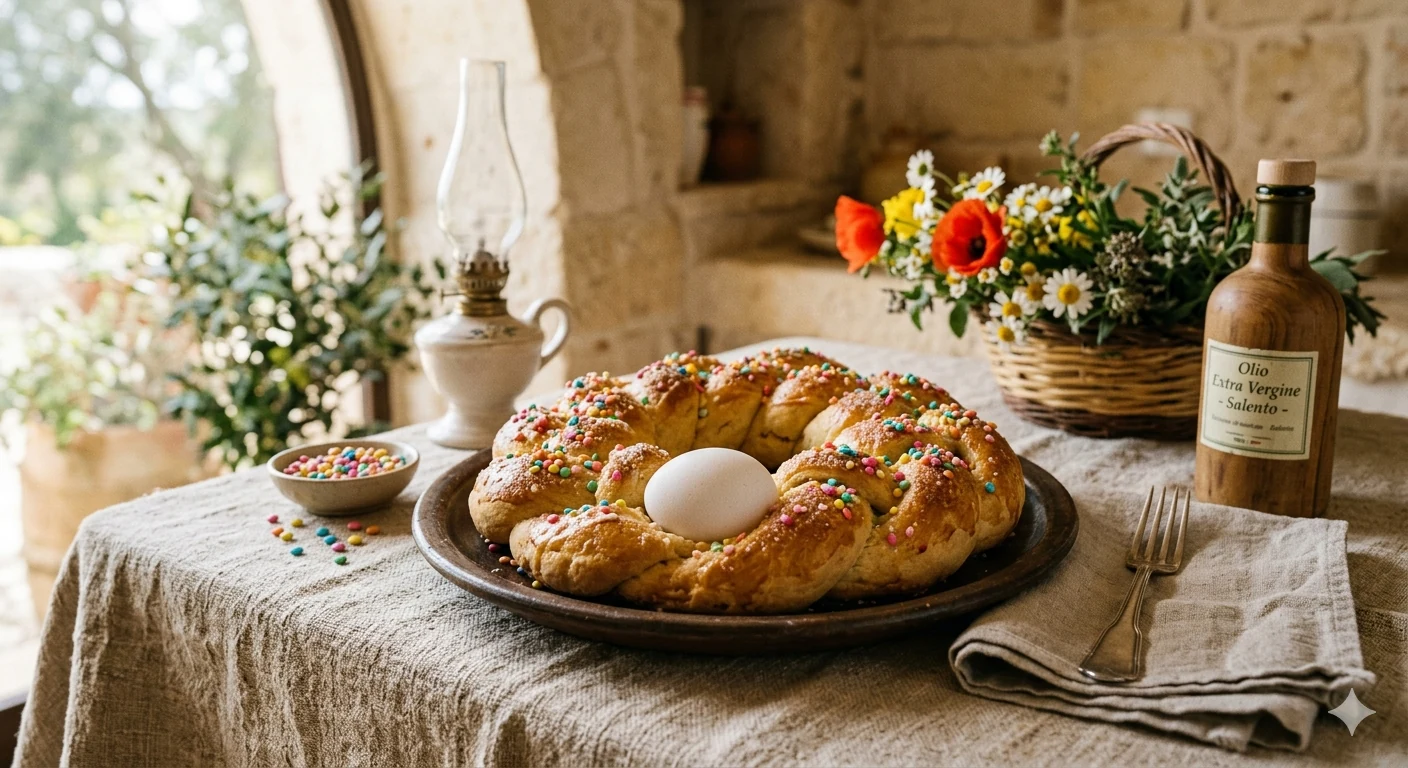
The awakening of the senses in Puglia begins when the shy March sun starts to warm the white stone alleys. The air, usually crisp, becomes dense and fragrant in these days: it is the sharp scent of baker's ammonia, grated lemon zest, and shortcrust pastry wafting from the half-open doors of local homes.
In Puglia, Easter doesn’t arrive with the calendar; it arrives with this ancestral aroma. It is the signal that the skilled hands of the local nonne (grandmothers) have begun weaving the Scarcella, the pastry of rebirth. But there is another sound, deeper and more vibrant, announcing Holy Week: the hypnotic lament of the Lazzareni, a chant that transforms the narrow streets into a stage for faith and history.
In this article, we take you into the beating heart of these authentic traditions—ideal for those seeking an experiential journey in the soul of the Mediterranean.
Lazarus Saturday: The Soundtrack of the Passion
Even before Palm Sunday, Puglia reveals its most mystical side. The Saturday preceding the Passion is dedicated to the Lazzareni (or Lazzarene), a tradition with Byzantine roots that still thrives in the Bari area and the Grecìa Salentina.
Who are the Lazzareni?
They are not mere singers; they are the keepers of memory. Groups of men—often members of local brotherhoods or village elders—wander from house to house or gather in the most picturesque corners of the historic centers to sing the Chant of Lazarus.
According to ancient custom, the quest of the Lazzareni took place in the heart of the night. The singers would knock on the doors of the slumbering villages, waking families with their sacred lament. In a gesture of gratitude and to honor this rite of passage, households would open their doors to offer fresh eggs—a symbol of budding life—and glasses of local red wine to warm the voices and spirits of the wanderers. Even today, in some Salento communities, this exchange is more than just an offering of food; it is a silent pact that renews the bond between the sacred and the everyday.
- The Meaning: The verses narrate the suffering and resurrection of Lazarus, foreshadowing Christ's destiny. It is a soul-stirring chant, often accompanied only by an accordion or a tambourine.
- The Tradition of Questua: Traditionally, the singers received fresh eggs, cheese, or wine in exchange for their performance. This rite of sharing bound the neighborhood together in a communal embrace.
The Scarcella: The Pastry that "Jailbreaks" Life
While the chants echo through the streets, the kitchens of historic masserie (manor farms) are buzzing with the ritual of the Scarcella. This pastry is not just a gastronomic delight; it is a powerful symbol of hope.
One Pastry, a Thousand Names
The beauty of Puglia lies in its linguistic and culinary diversity. While the shortcrust base remains the same, the Scarcella changes its "outfit" and name every 20 kilometers:
- In the Bari area: It is the classic Scarcella, often decorated with scleppe (white sugar icing) and colorful sprinkles known as anemine.
- In Salento: It becomes the Cuddhura (from the Greek kollura). It takes various shapes, such as the Pupa (doll) for girls or the Galletto (cockerel) for boys.
- In the Taranto area: It is often called Sportella, resembling a small basket—perfect for the traditional Easter Monday picnic.
The Symbolism of the Egg
The heart of the Scarcella is the whole hard-boiled egg, embedded in the dough and held in place by two pastry strips forming a cross. The name itself comes from the local verb scarcerare, meaning "to release from jail." The egg breaking through its shell symbolizes life breaking free from the prison of death.
Experience Easter in Puglia with To Be Local
As a DMC specialized in experiential travel, we believe that true luxury is not just a hotel room, but exclusive access to private moments that remain hidden from mass tourism.
Imagine spending Lazarus Saturday in a historic masseria, getting your hands floury as you weave your own Scarcella under the guidance of a local master, while the notes of the Lazzareni—invited specifically for you—resonate in the background.
Easter in Puglia is not something you watch; it is something you feel.
Do you want to witness the "Lazzareni" chant live or learn to weave your own Scarcella in an 18th-century masseria?
[Tell us your travel ideas] and we will design a bespoke Easter itinerary far from the beaten path.
Frequently Asked Questions about Easter in Puglia
What is a Scarcella and why does it have an egg?
The Scarcella is Puglia's traditional Easter pastry. The whole hard-boiled egg trapped in the dough symbolizes rebirth and the beginning of life, representing the "release" from the prison of winter and death.
When can I hear the Lazzareni chants in Puglia?
The Lazzareni are typically performed on Lazarus Saturday, the day before Palm Sunday. These moving choral performances echo through the historic centers of the Salento and Bari regions.
Is Scarcella known by other names?
Yes! Depending on the area, it is called Cuddhura (Salento), Sportella (Taranto), or Puddhica (Brindisi). Each name reflects a deep local connection to its specific town.